Connectivity is part of our daily life, important for our social needs, daily living, and professional career as well. The internet has made our life much easier, especially connecting people. Communication and transfer of data have never been easier with the internet at our fingertips. However, what if I tell you that with this new technology, you can even further enhance your connectivity, improving your experience or access to the internet? 5G is the answer.
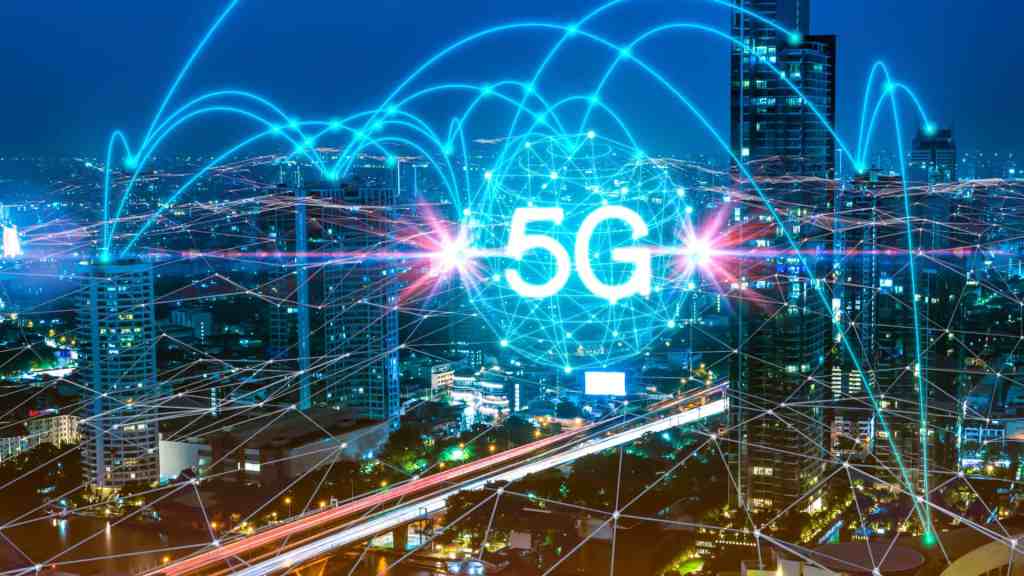
5G is not a recent euphoria. 5G has been in the making for years. 5G, as suggested, has 4 predecessors (Qualcomm, 2020):
• 1G delivered analog voice.
• 2G introduced digital voices (e.g., CDMA).
• 3G brought mobile data (e.g., CDMA2000).
• 4G LTE the era of mobile internet
After Kevin Ashton coined the term “internet of things (IoT) in the 1990s, the term was later used to describe mobile phones as the “IoT in your pocket” (BRAINBRIDGE, 2020). It soon evolved into being described as an “edge device” then by the 2000s, developers realized that 3G and 4G were not enough. With its 40-60ms temporal lag, 3G and 4G were not sufficient for real-time responses. This is where 5G comes in. 5G has been promised to deliver data at significantly lower latency. CNBC stated that 5G improves internet speed by as much as 100 times faster than 4G. But how would this imply in our daily lives?
With our lives becoming more and more dependent on the internet, latency has become detrimental in recent decades. For instance, autonomous driving vehicles require a constant stream of data to make informed, accurate, and immediate decisions. To be informed, accurate, and immediate, large quantities of data must be fed to the vehicle’s system at a continuous rate. The less the latency, the safer and effective the vehicle is. 5G is not only limited to autonomous driving vehicles but it is also many more applications as well such as medical devices, manufacturing and agricultural machinery.
Despite its promising speed of up to 100 times of 4G, 5G is somewhat unable to evolve into the solution that we are dreaming of. 3G and 4G were able to evolve at a much more rapid pace due to its similarities in preexisting infrastructure. They both operate under the ultrahigh-frequency radio wave (TV) which was ubiquitous. With that, 3G and 4G can easily expand their popularity and coverage. Unlike them, 5G operates under a super high-frequency radio wave. If operators were to implement 5G immediately, it means the termination of existing infrastructure to host 5G’s infrastructure which expenses huge sums of money (Grijpink, Ménard, Sigurdsson, & Vucevic, 2020).
Additionally, health concerns are heated topics for the revolutionary 5G. There are numerous debates over whether those health concerns are factual or not. However, according to the WHO in 2014, “no adverse effects have been established as being caused by mobile phone use”. However, WHO along with the International Agency for Research on Cancer classified all radiofrequency radiation—in which mobile phone signals are part of, as “possibly carcinogenic” (BBC News, 2020). Despite these publications, there is still no conclusive evidence that validates or invalidate health concerns.
In conclusion, connectivity is essential in our daily life and it fueled by rapidly developing technologies, 5G. It has been a long way up until 4G and yet 5G offers even more promising benefits. On the contrary, there are still limitations that prevent us from realizing 5G’s benefits such as the existing infrastructure and debated health concerns. There are enthusiasm as well as pessimism toward 5G currently and the future of 5G is still yet in questioning.
References:
BBC News. (2020). Are these masts dangerous or is it just fearmongering?. Retrieved 7 February 2020, from https://www.bbc.com/news/world-europe-48616174
BRAINBRIDGE. (2020). From 1G to 5G: A Brief History of the Evolution of Mobile Standards | My Brainbridge. Retrieved 7 February 2020, from https://www.brainbridge.be/news/from-1g-to-5g-a-brief-history-of-the-evolution-of-mobile-standards
Grijpink, F., Ménard, A., Sigurdsson, H., & Vucevic, N. (2020). The road to 5G: The inevitable growth of infrastructure cost. Retrieved 7 February 2020, from https://www.mckinsey.com/industries/technology-media-and-telecommunications/our-insights/the-road-to-5g-the-inevitable-growth-of-infrastructure-cost
Qualcomm. (2020). What is 5G? | Everything You Need to Know About 5G | Qualcomm. Retrieved 7 February 2020, from https://www.qualcomm.com/invention/5g/what-is-5g

 Lyhuy Ong's MIS304 site